Empowering Insect Farmers in Western Kenya: A Regional Milestone for the Insect Sector
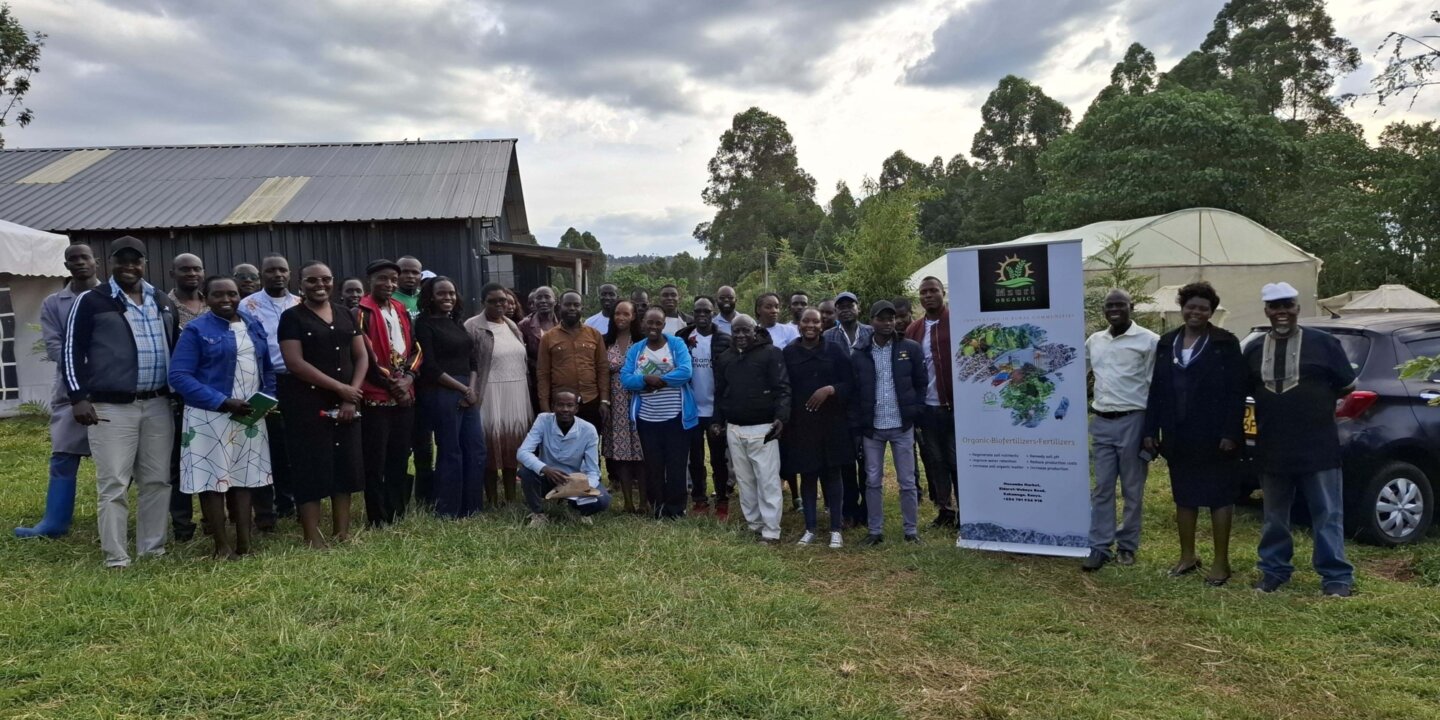
Participants of the AIFIP Western Kenya Membership Drive
On 14 October 2025, the Western Kenya insect farming community came together for a dynamic benchmarking, training, and membership drive session hosted at Mzuri Organics in Bungoma County. Organised collaboratively by the Association for Insect Farming and Its Products (AIFIP), Mzuri Organics, and the Netherlands Food Partnership (NFP), this event marked the first in a series of regional activations under the IPAK Five-Year Strategic Plan (2025–2029).
The session aimed to build the technical capacity of insect farmers, facilitate peer learning, promote best practices, and expand AIFIP membership. It brought together 43 farmers - both emerging and established producers of black soldier flies (BSF), crickets, and redworms - who engaged in hands-on training, market-oriented discussions, and data collection exercises. Simultaneously, the session contributed to increased inclusivity in the sector as most events and activities take place in Nairobi, raising the threshold for farmers from other counties to attend.
Hands-on Learning, Real-Time Exchange
The morning site visit at Mzuri Organics offered participants a practical view of insect rearing systems, followed by expert-led sessions on sustainable BSF production, waste-to-feed innovation, and quality assurance. Moderated discussions facilitated by AIFIP board members created space for deep peer learning around value addition, diversification, and emerging market uses of BSF, including pet food and organic fertilisers.
Strengthening Sector Voice and Collaboration
Beyond the technical training, the event served as a key moment to promote sector coordination. Vice Chairperson Dr. Lydia Kabue highlighted the importance of collective action and the benefits of joining AIFIP. Her call to action resulted in 15 new members signing up on-site, evidence of growing momentum in formalising the insect farming sector in Kenya.
Data for Future Planning
Participants also contributed to a live data-gathering exercise, designed to inform AIFIP's ongoing efforts in planning, advocacy, and resource mobilisation. Topics covered included production models, waste sourcing, record-keeping, market access, and capacity needs.
A Step Forward for IN-FEAST
This session is a key milestone in the Insect Farming in East Africa (IN-FEAST) Partnership, supported by NFP, which seeks to accelerate the sustainable growth of the insect sector to upscale sustainable protein production and strengthen multi-stakeholder collaboration across the region.
The learnings and linkages built in Western Kenya are only the beginning. Additional sessions are planned for other regions in 2026. Together, we are building a stronger, more connected insect farming ecosystem.
Author

Ibrahim Palaz
Coalition Builder