Progress and impact of the implementation of Rumen8 tool in a sustainable farm coaching model under the SNV TIDE 2 project in Uganda
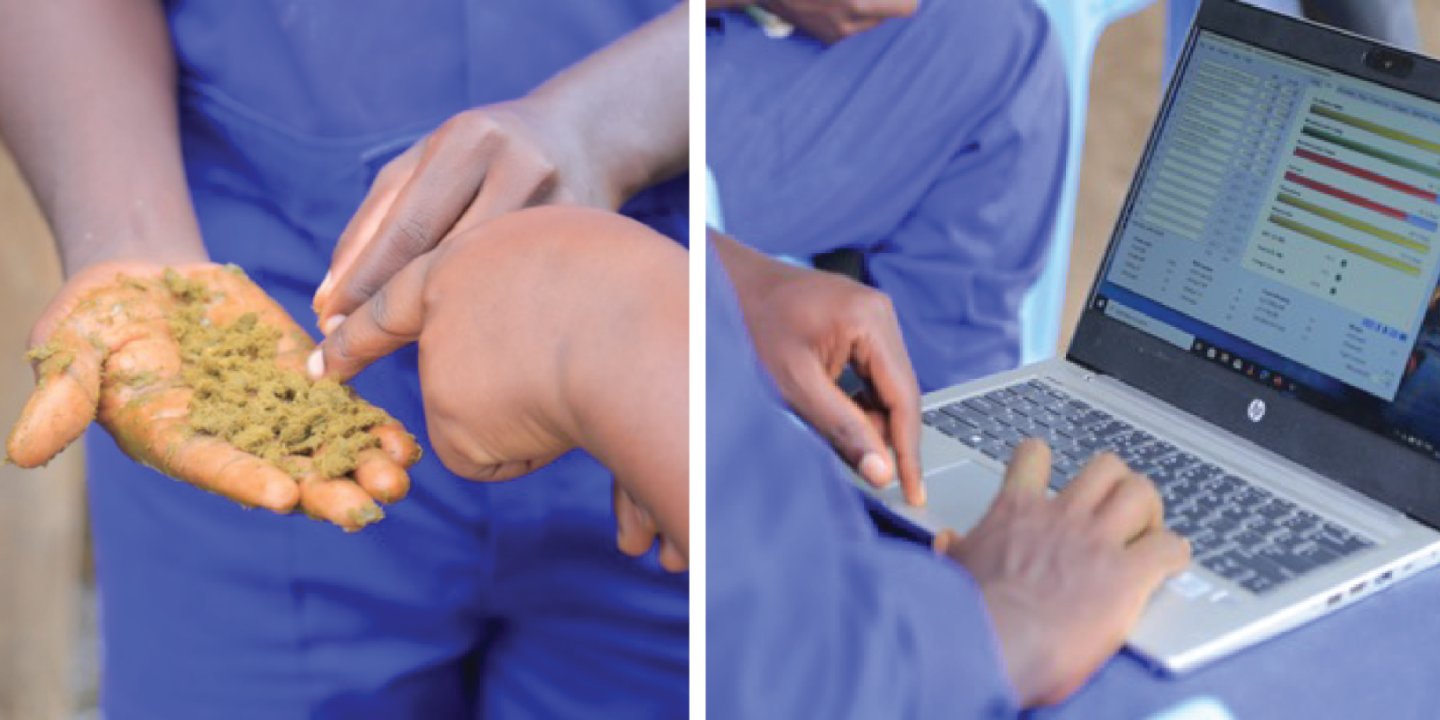
Left: farm advisors are scoring manure on the farm. Right: farm advisors are typing in the key farm data to view the results on the screen. Source: TIDE 2 field activity photo
The implementation of the Rumen8 tool in a sustainable farm coaching model under the SNV TIDE 2 project in Uganda has brought about remarkable progress and significant impact on dairy farms in Southwestern Uganda. Rumen8, a software application originally developed in Australia for cattle diets, has been adapted to cater to the dairy and beef sector in East Africa. Tropical grasses mostly used to feed or graze cattle on in East Africa have low nutritive values and are high in fibre. By optimizing cattle diets, Rumen8 plays a crucial role in identifying and rectifying nutrient imbalances, ensuring the well-being and productivity of the animals.
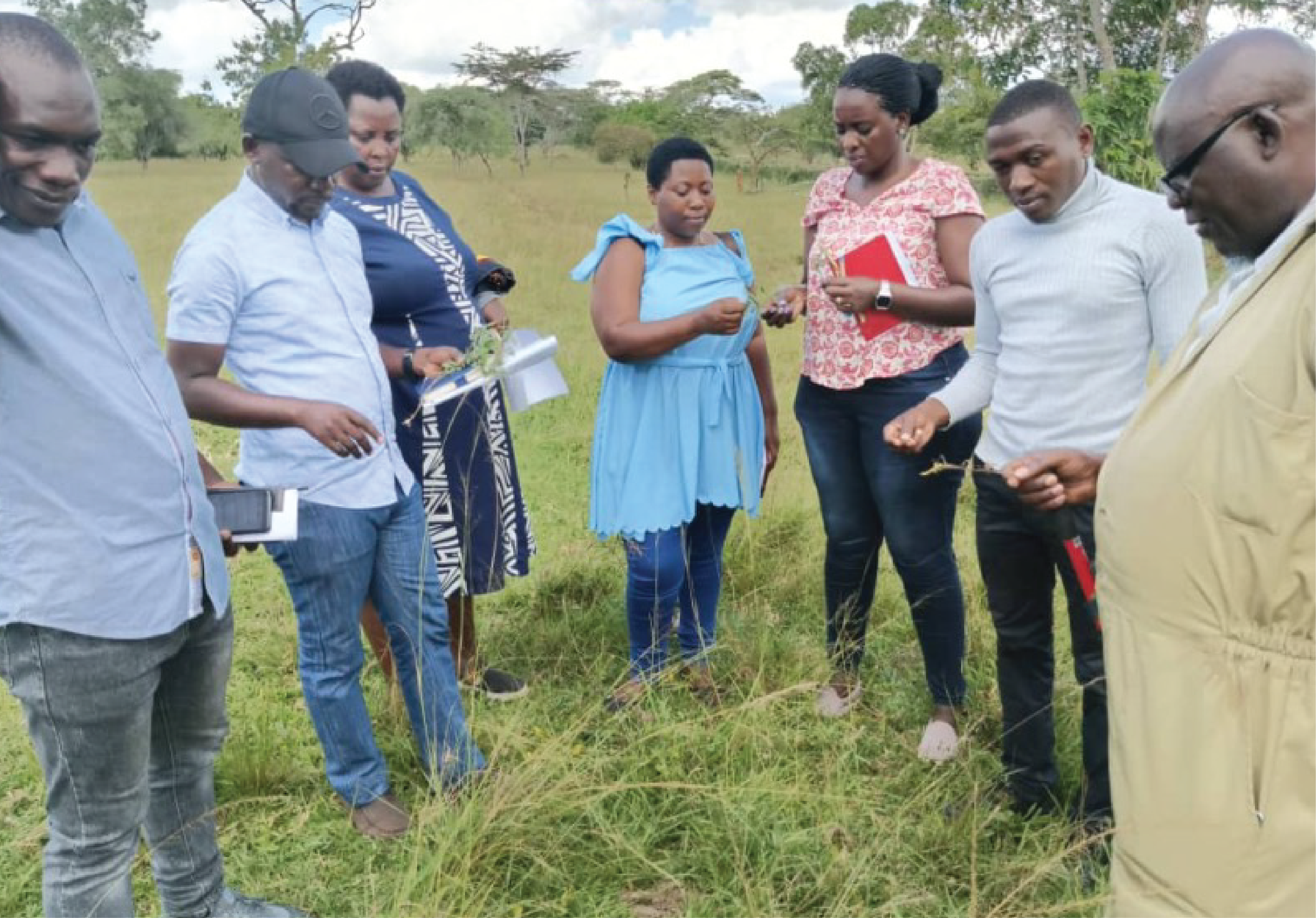
Taking teaching staff from academic institutions on a farm walk to assess the available forages and pasture grasses before using the findings in Rumen8. Source: Field activity report
Pilot in Southwestern Uganda from 2020-2021
In partnership with ProDairy EA Ltd based in Kenya and Rumen8 Pty Australia, the TIDE project conducted a pilot program in Southwestern Uganda from 2020 to 2021. This pilot involved 32 farmers from five districts and aimed to demonstrate the value and benefits of the Rumen8 software as an advisory tool for farm coaches and owners/managers. Additionally, it sought to measure the impact of Rumen8 on farm productivity, enteric methane emission intensity, and the margin between milk income and feed costs in different farming systems.
During monthly farm visits, farm coaches worked closely with the farmers, collecting key data and assessing farm practices and management skills. The data were then entered into the Rumen8 tool to improve the current ration and recommend different improved rations, which were discussed with the farmers for them to agree before starting to implement the ration. The farm coach can use the tool such that the farmer can choose from different rations, depending on the availability of different feeds, but all rations would show improved margin above-feed cost and optimize milk production.
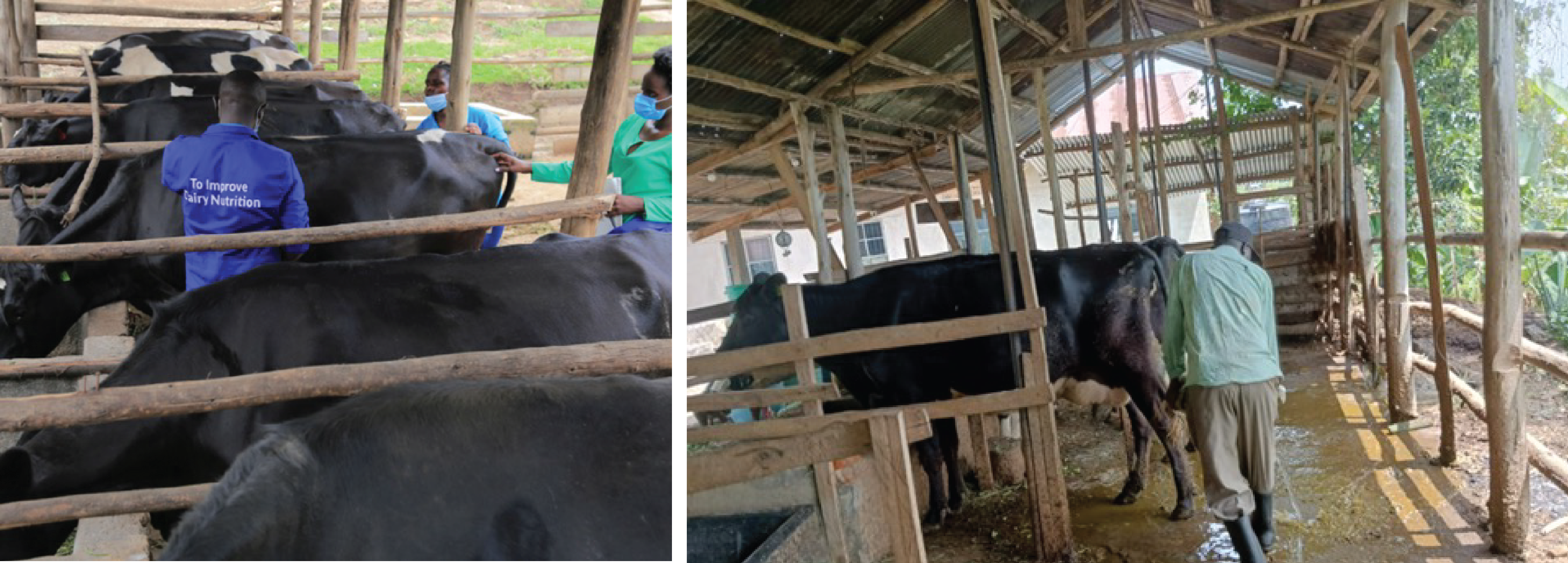
Left: Farm coaches take body weight and score the body condition and rumen fill of the cows before using the Rumen8 tool during the farm walk. Left: A farmer assisting the cow after milking. Source: Field activity photo by TIDE
Results and lessons learned from the pilot
The results from the pilot program were impressive. Milk production increased by 3.8 litres per day, representing a 34% increase from the baseline. The margin above feed costs also saw a significant improvement, rising by UGX 1,715 (20%). Moreover, the enteric methane emission intensity, a greenhouse gas emitted from livestock, decreased by 8.7%.
Mugabe Dairy Farm has demonstrated that a small holder farm can benefit from the Rumen8 tool. Four milking cows producing 120 litres. Milk production increased with 50% since June 2022. While the margin above feed cost increased to UGX 40,000/day from the four cows
The success of the pilot program led to several important conclusions. The Rumen8 software proved invaluable for farm coaches, enhancing their ability to advise farmers in the region. Using the tool consistently and implementing its recommendations resulted in improved rations and feeding practices, leading to better animal health and productivity. The combination of farm walks and the Rumen8 tool raised farmers' awareness of the importance of feed costs in relation to pasture quality, thus increasing the margin above feed cost. Rumen8 played a vital role in improving extension services, animal health, and animal productivity, and contributing to the Climate Smart Agriculture agenda.
The lessons learned from the pilot program shed light on the perspectives of both farmers and farm coaches. Farmers realized the benefits of investing in improved forage production, pasture management, and balanced diets, as these investments resulted in increased milk production, improved fertility, and reduced (metabolic)disease incidences. Farm coaches, on the other hand, highlighted the importance of knowledge in ruminant nutrition, improved forage production, and feed cost management to effectively use the Rumen8 tool.
To ensure the sustainability of the farm coaching model, the TIDE project introduced a new approach. Initially, the project covered 100% of the cost of delivering farm advice, but they gradually transitioned to a model where farmers paid 100% of the cost while the project provided 50% support. Currently, 75 farmers are participating and paying for the service based on the results they observe in their herds and farms. This self-sustaining model ensures that farmers receive reliable and quality farm advisory services also after the TIDE project.
Rolling out and upscaling Rumen8 with support from NEADAP
Building upon the pilot program's success, the Forage and Dairy Nutrition unit of TIDE, in collaboration with the Netherlands East Dairy Partnership (NEADAP), is rolling out and upscaling the use of the Rumen8 software application to other user groups. This three-step approach involves gaining support from local government leadership and higher education institutions (buy-in activities), training and capacity building for dairy extension staff and teaching staff, and training trainers of trainers with support of ProDairy (EA). The aim is to expand the reach and impact of the Rumen8 tool in promoting sustainable farm coaching throughout Uganda.
The progress and impact achieved through the implementation of the Rumen8 tool in the TIDE 2 project demonstrate the transformative power of technology in agriculture. By empowering farm coaches and farmers with knowledge and resources, Rumen8 contributes to improved animal productivity, reduced environmental impact, and the realization of sustainable farming practices in Uganda.
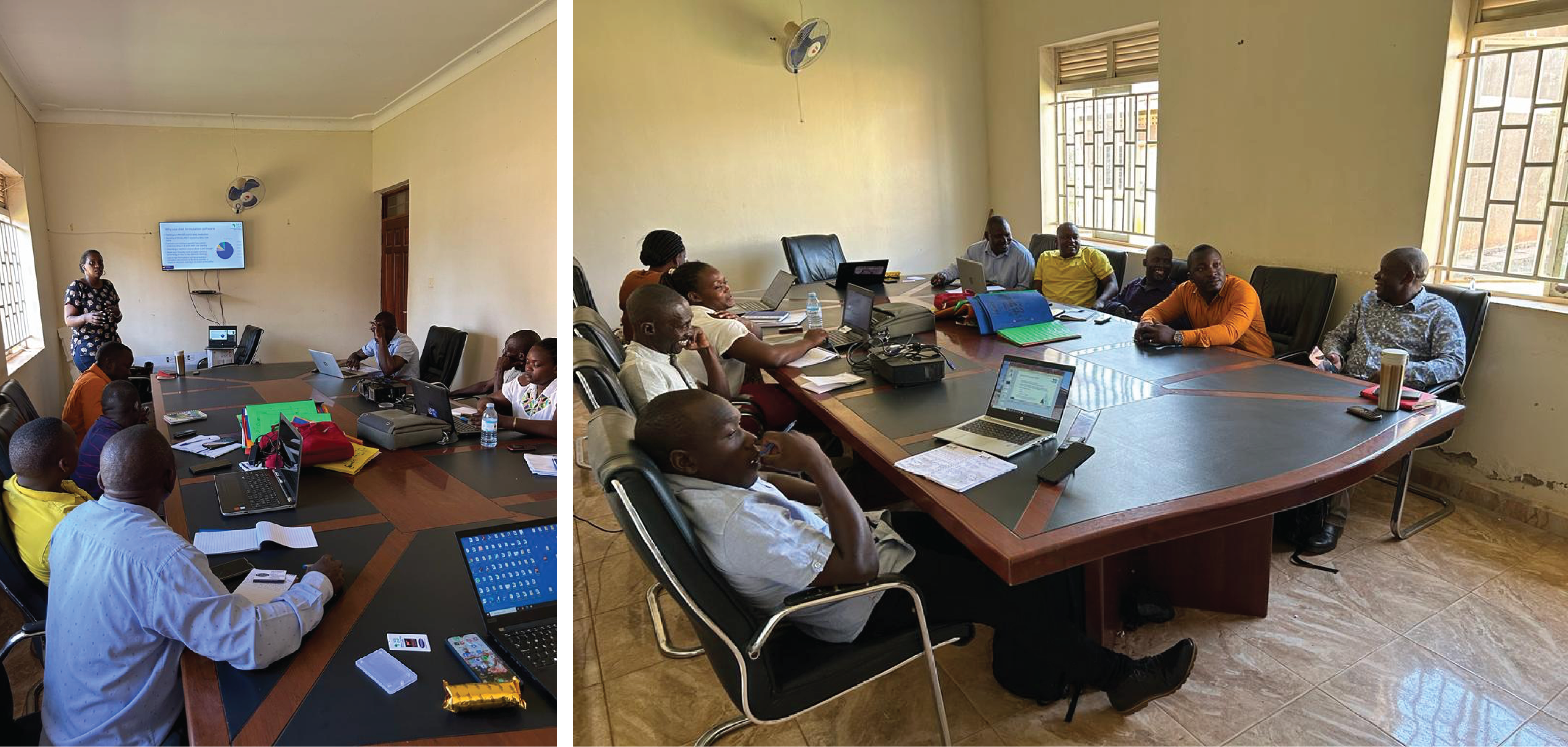
Training Lyantonde district government extension staff in Rumen8
Buy in activities have been conducted in 4 districts (Kiruhura, Kazo, Ntungamo and Lyatonde) while training of extension staff has been done for 3 districts (Kazo, Kiruhura and Ntungamo) and 2 Universities and 2 institutes of higher education (Bishop Stuart University Mbarara, Mbarara University of Science and Technology, Kyera and Rwetanga farm institutes). So far in total 6 staff members of the academic institutions and 11 local government extension workers were trained to become trainers in Rumen8.
Please contact Paul Kimbugwe at [email protected] or Jos Creemers at [email protected]
Authors

Paul Kimbugwe
Senior Advisor - Dairy / M&E at SNV Uganda, TIDE Project

Jos Creemers
Managing Consultant, ProDairy E.A. Ltd