Kenyan delegation visits the Netherlands: Tobias Okeno reflects on Food losses in the dairy sector in Kenya

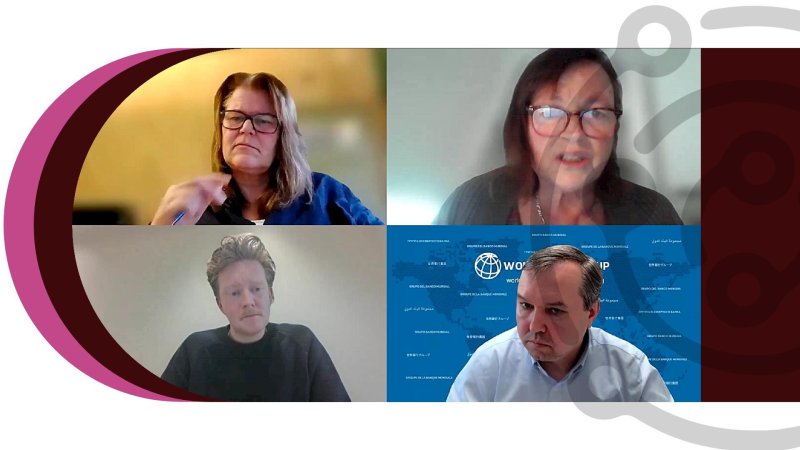
Dr. Tobias Okeno (right) explains a point to Ken Owino ( left) at Van Hall Larenstein University of applied sciences
A Kenyan delegation recently visited the Netherlands as part of a learning and exchange program within the FORQLAB program.
The delegation which visited the Netherlands between 14th-24th June, consisted of Alexander Kahi, Wilson Karimi and Tobias Okeno from Egerton University. Other members were: Romanus Odhiambo, Beatrice Owiti from Meru University of Science and Technology. The team visited different partners and stakeholders in fact finding missions and also to share and learn from each other.
During their visit to Van Hall Larenstein university of applied science, the team had a series of meetings and discussions and also participated in accessing master students projects which explore technical and policy interventions required to encourage safe products and reduce food losses for the avocado and dairy sectors in Kenya.
NFP's Ken Owino, had a chance to speak to Dr. Tobias Okeno who is a researcher and lecturer in the area of animal production. Tobias explained that 40% of Kenya’s food is wasted or lost along the value chain leading to food insecurity. He further added that Dairy and Horticultural Sectors have been pointed out as some of the sub-sectors accounting for the largest share of food waste in Kenya. Food loss in the dairy sector is estimated to be between 7-11%.
Reflecting on the causes of the food losses, Tobias opined that poor handling at production, spillage and spoilage occasioned by poor access to markets, rejection at markets, poor milk handling practices and irregular power supply in milk processing plants are some of the main causes of food losses in the dairy sector.
Food losses in the dairy sector are lower because when milk is rejected due to quality or other reasons in the formal sector, the milk can still be converted into other products or be sold in informal markets thus reducing the loss. However, Tobias warns that the milk sold through the informal sector often fetches a lower price and as such still counts for a loss to the farmer.
To address these challenges, FORQLAB program worked with smallholder farmers from Kaptama, Kitinda and Githunguri dairy cooperative societies. Tobias says that with the interventions undertaken through FORQLAB have resulted in positive changes in the cooperatives. Even the involvement of the county government at policy level has been commendable.
Tobias believes there is a lot that can still be done to make the dairy sector more profitable and sustainable.
Tobias says, "The fact that we still dont t have enough milk means the market is still there, so the future looks bright."
Author

Ken Owino
NFP Communications