Insights from Dutch Parliamentary Commission debate on food security, water and biodiversity
Maarten van Nieuw Amerongen
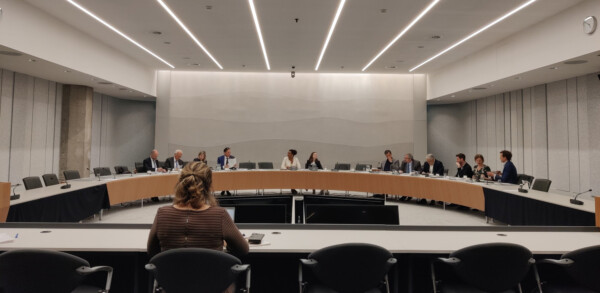
On May 23, the parliamentary commission for Foreign Trade & Development Cooperation assembled to discuss food security and water policies. The presence of both Liesje Schreinemacher, Minister for Foreign Trade & Development Cooperation, as well as Piet Adema, Minister of Agriculture, Nature and Food Quality, underscored the shared responsibility for Dutch efforts in working towards achieving SDG2: Zero Hunger and related SDGs. This joint commitment by both ministers emphasized the importance of a coordinated approach to tackle these pressing global challenges. The discussion focused in specific on the following policy developments: (1) the step-by-step plan for global food security, (2) the UN Water Conference, (3) the structural knowledge hubs in combination countries, and (4) international biodiversity. While this summary below provides a brief overview of several major points discussed, it is important to note that the full debate encompassed a wide range of additional points that are not covered in these highlights.
1. Step-by-Step plan for global food security policy (in Dutch)
Reflections made by parliament demonstrated a commendable level of awareness regarding the impact of complexities, interdependencies, and risks of our food systems. Numerous references were made to the impact of climate change, conflict and COVID-19 on global food security, with an alarming 345 million people that are in acute food insecurity at this moment. The significance of Dutch knowledge and expertise in driving sustainable transformations within food systems, both in the Netherlands as well as abroad, was frequently emphasized, acknowledging the potential for substantial contributions in this area.
The debate in particular focussed on a few main topics:
External debts of many African countries in relation to food security. Minister Schreinemacher acknowledged her awareness and shared concerns around the debt position of African countries. She mentioned that addressing such issues will be part of the Africa Strategy policy document. The Minister said the Netherlands will advocate for discussions on debt restructuring and the strengthening of African institutions' capacity (see page 27 of Africa Strategy for details).
Application of the SDG check in relation to the upcoming Agricultural Agreement. Regarding concerns about the impact of Dutch food system policies on food systems beyond our borders, the SDG check was discussed. Both Minister Schreinemacher and Minister Adema highlighted that the SDG check is a mandatory component of the policy process. Minister Adema acknowledged the interconnectedness between Dutch agriculture and the international world, emphasizing that the Netherlands does not exist in isolation. He recognizes the changing role of the Netherlands in global food production, emphasizing the importance of transitioning to sustainable practices while maintaining a significant position. He specifically mentioned the seed sector and the Dutch agriculture knowledge and expertise that can contribute to sustainable food systems worldwide. Additionally, in a two-minute debate, Minister Adema expressed his willingness to speak with the authors of the Agricultural Manifest in relation to the upcoming Agricultural Agreement.
The impact of the recently announced budget cuts was a concern of several MPs. Minister Schreinemacher shares the expressed concerns by parliament. She shared that the Ministry is currently assessing how and to what extent these expected budget cuts will impact the development cooperation portfolio.
National Food Systems Pathways. Minister Schreinemacher highlighted that the efforts of the Netherlands on food security will be attuned to the National Food System Pathways that have been formulated in relation to the UN Food Systems Summit.
Trade and policy coherence. Part of the debate centered around the role of the Dutch private sector, trade agreements, imports and exports in relation to its contribution to food security. Minister Schreinemacher highlighted the Dutch policy focus on "public where needed, private where possible," while underscoring the importance of the private sector's knowledge and expertise in improving food security. She mentioned impactful initiatives such as the PUM-programme, Orange Knowledge Programme, and the 'Initiatief Duurzame Handel' (Sustainable Trade Initiative). Regarding trade and markets specifically, Minister Schreinemacher highlighted the significance of WTO regulations, as well as programs like "Everything but Arms" that grant least developed countries duty-free and quota-free access to the EU market. She also mentioned Economic Partnership Agreements as relevant efforts in this context.
Food loss & waste. Minister Adema emphasized that this topic is a key priority in agricultural policy. He mentioned the Dutch contribution to the Food and Agriculture Organization (FAO) and highlighted the Flying Swans and Mekong Delta programs. Adema highlights that both initiatives play a crucial role in reducing food losses by investing in areas such as agro logistics and cold chain innovation.
Commitments made:
Minister Schreinemacher will inform parliament, before the UNFCCC COP28, about policy steps related to speeding up the transition towards a worldwide plant-based diet. Taking into account the Plant Based Treaty.
2. Report on the UN Water Conference
Parliament sought clarification on the Netherlands' plans to advance towards achieving SDG 6: clean water and sanitation, particularly in light of the recent UN Water Conference. Questions were raised regarding the implementation of the UN Water Agenda that emerged from the conference and the intended appointment of a UN Special Envoy on Water. Also here the significant role of Dutch knowledge and expertise at the global level was recognized, emphasizing specifically the importance of collaboration between the government, private sector, knowledge institutes, and civil society organizations. The Blue Deal, salinity management, and water quality were among the key topics highlighted during the debate around the Water Conference.
Commitments made
Minister Schreinemacher will inform parliament, before the UNFCCC COP28, about execution of the UN Water Agenda, the related process in the UN agencies, and the appointment of the UN Special Envoy on Water, as well as the progress on commitments made by the Netherlands.
3. Structural Knowledge hubs in combination countries
Parliament expressed a desire for more information about the structural knowledge hubs, as described in the letter to parliament on 17 May, and the planned evaluation of the pilot in Indonesia, known as the NL Knowledge House. The evaluation will take place late 2023. Members of parliament sought clarity on the expansion plans and the potential impact of these knowledge hubs on enhancing knowledge exchange and collaboration in potentially additional combination countries.
Commitment made:
Minister Schreinemacher will inform Parliament in the explanatory memorandum to the 2024 budget update (or as soon as possible afterwards) about the evaluation of the pilot knowledge hubs and the consequences of this evaluation for the active role of the Minister in scaling up this pilot in combination countries.
4. International biodiversity
Parliament emphasized the pressing urgency of taking action to address the ecological crisis. Stressing that the way food is currently produced is the cause of 80% of deforestation, one third of global greenhouse gas emissions, as well as the biggest part of biodiversity loss. The focus of the discussion revolved around actions for transitioning towards a more plant-based diet. Minister Schreinemacher highlighted that her colleague, Minister Van der Wal, had earlier confirmed the need for this transition, but shared that the reality is often mixed, and that small-scale agriculture in developing countries makes a transition more complex in those regions. Minister Adema mentioned that the Netherlands is currently moving towards a 50/50 percent based plant/animal protein diet, but that there is a need to further develop this goal towards a 60/40 ratio. The Plant Based Treaty was mentioned by parliament as a potential policy development where Minister Schreinemacher could play a leading role.
Commitment made:
Minister Schreinemacher committed to inform parliament, before COP28, about policy steps concerning the transition to a plant based diet and to look at the Plant Based Treaty.
Author

Mariëlle Karssenberg
Partnership Builder - Netherlands Food Partnership