Global Food Policy Report & Event 2021: The challenges of food system transformation
IFPRI’s 2021 Global Food Policy Report, released in April, has been published at a time when the impacts of the COVID-19 pandemic continue to grow. With the 2021 UN Food Systems Summit set for September, the global policy focus is on transforming food systems after COVID-19.
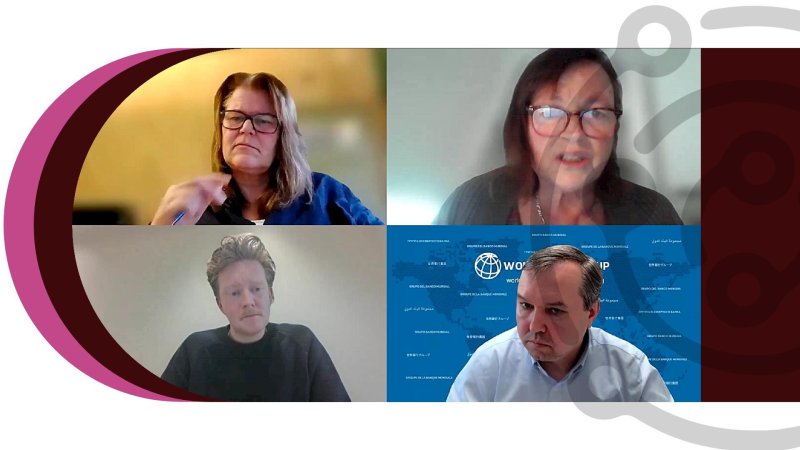
A virtual event on April 15 organized by IFPRI, the Dutch Ministry of Foreign Affairs and Netherlands Food Partnership explored insights from the report, focusing on the challenges of food systems transformation post-pandemic.
“I am worried when I read this report about what is happening to food security. Not just in the short term, but especially in the long term,” Paul van de Logt, Head of Food and Nutrition Security, Dutch Ministry of Foreign Affairs) said in his opening statement, But he said he is also hopeful that the GFPR can provide important scientific input to reach a turning point where policies are informed by science and their interventions ensure access to healthy diets. “Researchers can be the heroes to guide policies in what we need to do next,” he said.
Reasons for worry and hope
IFPRI Director General Johan Swinnen, John McDermott, Director of the IFPRI-led CGIAR Research Program on Agriculture for Nutrition and Health (A4NH), and IFPRI Senior Research Fellow Neha Kumar presented on the GFPR.
After significant reductions worldwide in malnutrition and hunger, those numbers have been rising since 2014, and now the pandemic is placing more at risk. Three billion people still cannot afford a healthy diet and 2 billion people live with a micronutrient deficiency. The pandemic has also revealed both strengths and weaknesses of our food systems, depending on location; poorer countries and especially women and children have been disproportionately affected by pandemic impacts. Noting that the pandemic is far from over and that we should be prepared for future shocks, McDermott observed: “We better get used to it.”
However, there is also hope that we are at a transformative moment in history, speakers said. To briefly highlight a few of the reasons why:
- We can use the lessons from the crisis to transform food systems.
- The crisis has generated significant creativity and innovation in the public and private sectors. From that, a shift in mindset seems possible, especially with the upcoming global summits in 2021.
- Putting policies in place and political will alone are insufficient as long as the basic policy infrastructure is lacking in adaptability and the ability to scale. But the opportunity to build such structures are there.
- Building greater cross-sectoral coordination will support such efforts. This will require moving away from competition and towards finding alignment.
- There is increasing understanding that both resilience and efficiency have to be integrated in the food systems transformation framework next to health, sustainability and inclusion.
Watch the full Netherlands Discussion on IFPRI's 2021 Global Food Policy Report
Author

Mariëlle Karssenberg
Partnership Builder - Netherlands Food Partnership