Enhancing Agricultural Sustainability in Uganda Through Effective Manure Management
Ugandan soils, once known for their high fertility, are now losing nutrients at an alarming rate, worsened by poor farm practices and population pressures, resulting in the loss of approximately 80 kilograms of nutrients per hectare annually. With a significant portion of the population dependent on agriculture, the continued loss of nutrients poses a severe threat and food security risk. The Uganda Vision 2040 and the short-term planning framework of the Ministry of Agriculture, Animal Industry and Fisheries, the Agriculture Sector Strategic Plan 2015/16-2019/20, emphasise the crucial role of fertiliser: synthetic/artificial and organic, use in boosting agricultural production and productivity. However, efforts to maintain soil fertility and increase food and crop production in the country are also hindered by the limited use of organic materials to replenish soil nutrients.
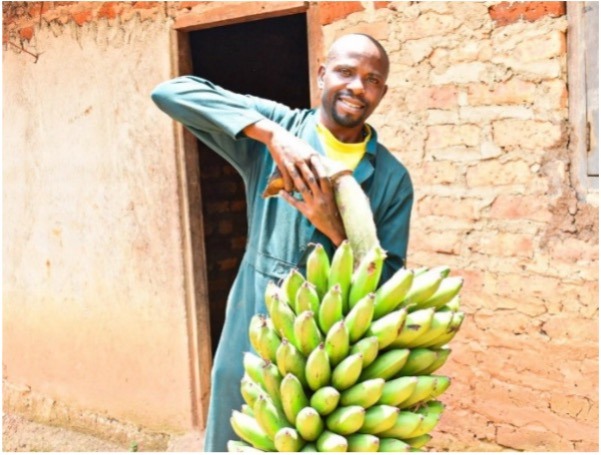
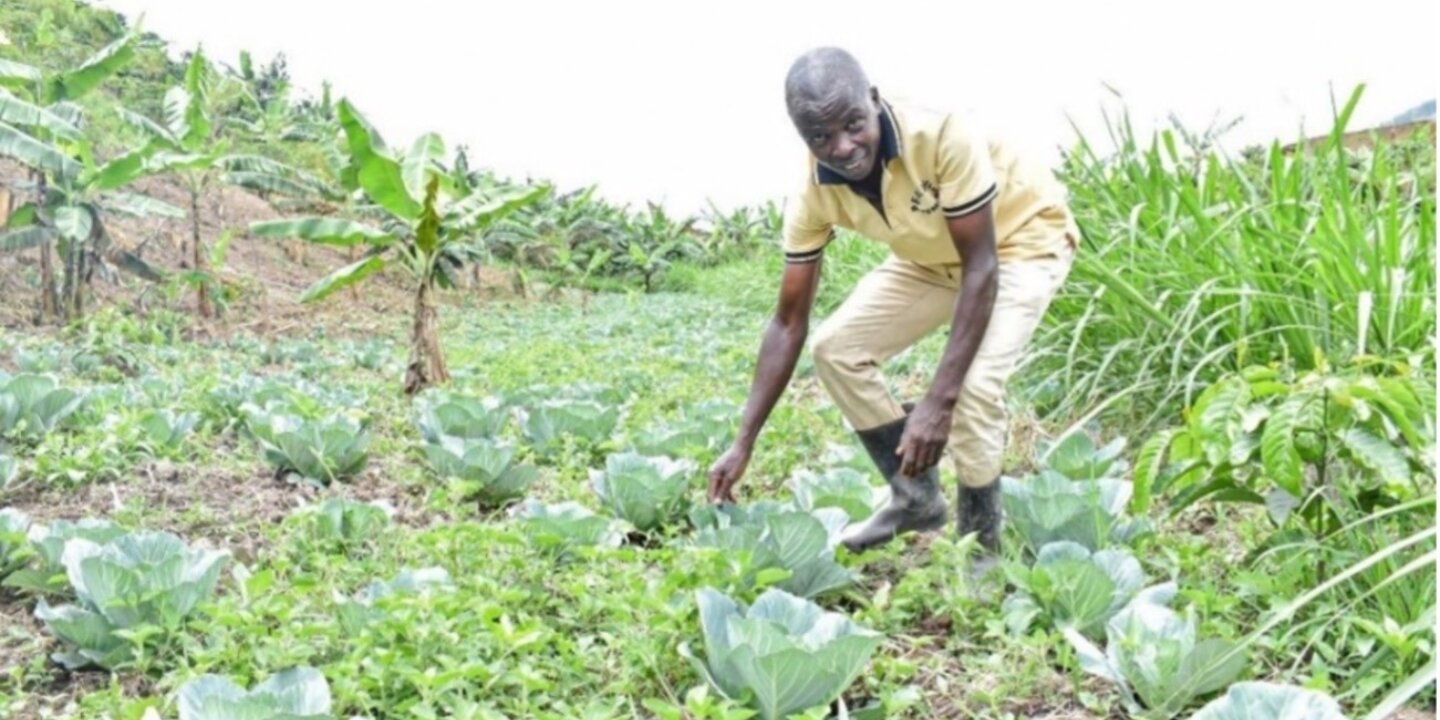
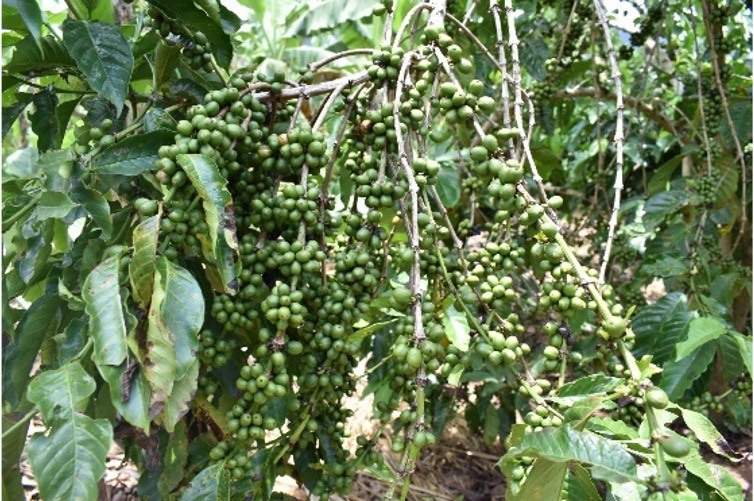
In the Rwengwe fields, Buhweju district, southwestern Uganda, Mwije Eliterino makes his daily journey to tend to his transformed plot of land. Years ago, his Rwengwe farm was dotted with wilted plants and parched soil. Today, vibrant shades of green now dominate the area. Lush cabbage leaves replaced the once small and lacklustre heads, blooming plumper and healthier. The bananas, once modest in size, have grown impressively, each banana elongated and robust, their green skins glistening. Where forage was once sparse and thin, it now forms a thick carpet of vibrant green ground cover, replacing the once barren patches of dirt. The coffee plants stand tall, their branches heavy with the promise of a bountiful harvest. Mwije’s entire farm is a welcome sight.
This was not always the case with my farm; I had weathered crops, dry land, and low crop yields. It affected my livelihood, as I had limited food for my family, not even extra to sell to get income until I attended one of the SNV trainings about manure management, he recalled.
Recognising the importance of organic fertilisers and the need for sustainable soil fertility practices, the Integrated Smallholder Dairy Programme (ISDAP)—an essential component of the Inclusive Dairy Enterprise (TIDE) project funded by the Embassy of the Kingdom of the Netherlands and implemented by SNV, an international development organisation—commenced in 2022 to instruct smallholder farmers in effective manure handling. To date, 1,496 farmers have benefited from direct support in managing manure. Overall, the programme aims to directly impact and improve the livelihoods of over 15,000 smallholder farmers in southwestern Uganda through increasing jobs, incomes, and food and nutrition security.
Training tailored to tackle the challenges farmers encounter regarding manure, often considered waste, aims to enlighten them about its potential as a valuable resource for enhancing soil quality and boosting crop yields. Through these sessions, Mwije acquired the skills to harness the benefits of his manure, marking the beginning of his transition away from artificial fertilisers.
Once reliant on the inherent fertility of his land, Mwije is now championing organic fertilisers, given the comparatively higher costs of artificial ones, which remain financially unattainable for small-scale food producers in the area.
The decision to use organic fertilisers was because of the high prices of commercial fertilisers. I could not afford the UGX140,000 for a bag of NPK fertiliser. Not only was it expensive, but the small harvests it yielded barely met my needs, and I would need to apply it every season, Mwije narrated.
However, adopting efficient manure handling practices in Uganda’s smallholder farming community faces hurdles. A study by the Uganda National Council for Science and Technology highlights limited knowledge regarding manure management and its benefits as a primary obstacle inhibiting widespread adoption.
Even among farmers who traditionally rely on manure, its effectiveness is compromised by poor handling practices, resulting in diminished quality that inadequately supports farm productivity. This quality limitation discourages investment in composting manure with other organic materials and waste, creating a cycle of underutilisation despite its potential benefits.
ISDAP, through its field teams, has been undertaking skilling sessions to advance manure handling, increase crop production, and improve soil structure. “We have received positive feedback from our farmers. Previously, farmers were helpless and had no alternative. However, organic fertilisers offer a more cost-effective alternative as the resources are obtained from their farms. On top of this, farmers registered a noticeable increase in crop yields,” added Dan Kyeyune, an ISDAP field officer charged with training and knowledge/skills transfer.
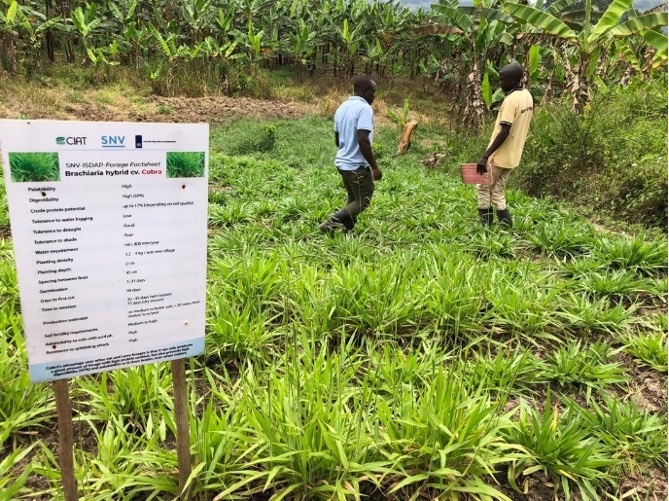
Previously, my forage would take some time to grow, but now, with the help of organic fertilisers, the growth is faster. And because of all the abundant forage, there is improved nutritional quality of the feed, which has increased milk production, with each cow now yielding between 5 to 8 litres per day.
“This also extends to my banana plantation; since the application of the manure, they are now healthier and, as a result, fetch higher prices in the market. Previously, I could sell one bunch for UGX8,000, but now it goes for UGX15,000.”
Mwije’s cabbage, dairy and banana farming fortunes mirror those in his coffee investment. “Back then, I would harvest around 120 kilograms. With the improvements, I am harvesting around 200 kilograms with healthier and heavier cherries. With this, I am now earning around UGX1.5 million, which was not the case before as I was earning UGX1 million from coffee.’’
Manure management is a critical driver in enhancing agricultural sustainability in Uganda, as evidenced by Mwije’s story, which is also reflected in thousands of ISDAP-supported farmers. Farmers can harness its potential as a valuable resource for soil fertility, crop production, and environmental conservation by addressing its importance and tackling barriers to adoption. Through collaborative efforts and innovative solutions, Uganda can pave the way for a resilient and prosperous agricultural future.
The Integrated Smallholder Dairy Development Programme (ISDAP) is part of The Integrated Dairy Enterprise Project (TIDE-II), from 2022 to 2024, funded by the Embassy of the Kingdom of the Netherlands. ISDAP seeks to address the challenges of 15,000 smallholder dairy farmers in Southwestern Ugandas Rwenzori, Kigezi, and Greater Ankole sub-regions. Through an integrated farming system, the programme aims to enhance smallholder farmers livelihoods, incomes, and food security.
Authors
Emma Atuhaire Babiiha
David Tusasiibwe
SNV Advisor Smallholder Dairy Programme