Collaboration essential for reducing food losses in avocado
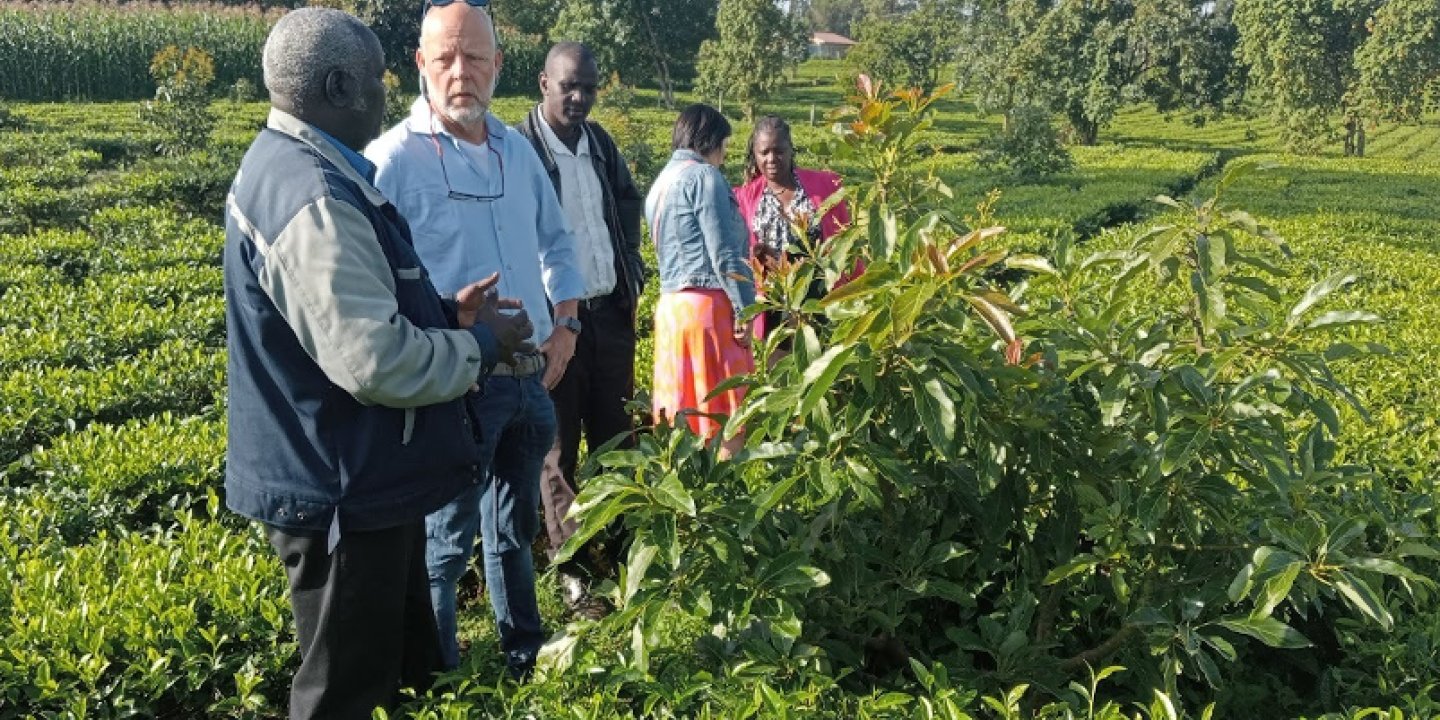
At a farm visit with the Nandi cooperative. Avocado is replacing tea.
In July, the FORQLAB partners visited all 7 avocado and dairy cooperatives in Kenya. The trip served to look back at the student research into food losses so far and to plan the activities in the final year.
Peter Bouma, a lecturer at the HAS Green Academy was part of the delegation and visited the avocado farmers in Nandi county. Some of his students did research into the losses in the avocado chain. Peter: “One group looked at the feasibility of sourcing from smallholder farmers. Others looked into harvesting oil from second grade avocados. A third group looked into the sea route of Kenyan avocados for the European market.” You can find their videos on NFPConnects.
The FORQLAB partners adopt the Living Lab approach, which means that the cooperatives, their business partners and other stakeholders steer the action research by students.
According to Peter, the FORQLAB collaboration has been a catalyst in the whole process of identifying key issues and planning for further action in Nandi county:
By coming together as a cooperative, they create an alternative for farmers that are exploited by some traders. With government support, they are building an aggregation centre, so the cooperative gets in control of farm transport and the grading process. This will certainly improve the farm gate price in the area. Nandi county is famous for its champion athletes, but I think the cooperative board are champions too.
Looking into the plans for the coming year, Peter notes that FORQLAB can contribute by identifying ways to collect and manage data about the avocado supply chain.
When the cooperatives know in time what volumes and quality of avocados they will harvest, it makes them reliable partners for other businesses in the avocado chain. ICT solutions may help the cooperatives in their data management.
Author

Ken Owino
NFP Communications